---
title: "Industrial Box PCs Market Outlook 2024–2030: Steady Growth Driven by Automation, Edge Computing, and Application Demand"
description: Explore the Industrial Box PCs market outlook for 2024–2030, where global shipments are projected to reach 661.5 million units. Discover how steady growth is driven by industrial automation, edge computing, and IIoT demand across manufacturing, energy, and medical sectors, emphasizing the critical need for rugged reliability and long-term lifecycle support in mission-critical environments.
image: https://blog.dfi.com/hubfs/20260106_TrendWatch_Industrial%20Box%20PC%20Market%20Report_%E5%AE%98%E7%B6%B2%E7%B8%AE%E5%9C%96_1600x900px.jpg
---
[](https://www.dfi.com)
Tech in Days

- [Contact](https://www.dfi.com/contact/sales)
- [About us](https://www.dfi.com/about/companyinformation)
- [TW](https://blog.dfi.com/zh-tw/industrial-box-pcs-market-outlook-2024-2030)
EN

- Contact
- About Us
EN
- [TW](https://blog.dfi.com/zh-tw/industrial-box-pcs-market-outlook-2024-2030)
- [Innovation Spotlight](https://blog.dfi.com/en/tag/innovation-spotlight) 
- [Trend Watch](https://blog.dfi.com/en/tag/trend-watch) 
- [Success Showcase](https://blog.dfi.com/en/tag/success-showcase) 
- 


- [Innovation Spotlight](https://blog.dfi.com/en/tag/innovation-spotlight)
- [Trend Watch](https://blog.dfi.com/en/tag/trend-watch)
- [Success Showcase](https://blog.dfi.com/en/tag/success-showcase)
[Trend Watch](https://blog.dfi.com/en/tag/trend-watch) 2026/01/19
# Industrial Box PCs Market Outlook 2024–2030: Steady Growth Driven by Automation, Edge Computing, and Application Demand
Table of Content
## Industrial Box PCs Market Outlook 2024–2030
The Industrial Box PCs market continues to demonstrate stable, long-term growth as industries worldwide accelerate digital transformation. According to industry research, the global market is projected to grow from 563.6 million units in 2024 to 661.5 million units by 2030, achieving a 2.7% compound annual growth rate (CAGR).
Rather than signaling slow momentum, this steady growth reflects the nature of industrial investment cycles—where reliability, long lifecycle support, and application suitability are valued over rapid hardware refreshes. Industrial Box PCs remain a foundational technology enabling automation, IIoT connectivity, and edge-based intelligence across critical sectors.
## Why Industrial Box PCs Still Matter
Industrial Box PCs are purpose-built computing platforms designed for harsh, mission-critical environments where conventional IT hardware cannot operate reliably. Key characteristics include fanless, sealed designs that resist dust and vibration, wide operating temperature support, solid-state storage for long service life, and the ability to sustain continuous 24/7 operation.
As industrial architectures evolve, Industrial Box PCs are no longer limited to basic control functions. They increasingly serve as intelligent edge computing nodes, enabling real-time data processing, localized analytics, and operational decision-making closer to machines and infrastructure—while reducing reliance on cloud-only architectures.
Today, Industrial Box PCs are widely deployed across manufacturing, energy, defense, and medical environments, where system reliability, long lifecycle support, and deployment stability are essential. In these applications, they form the backbone of industrial automation, real-time monitoring, and edge-enabled operations in demanding conditions.
## Regional Outlook: Where Growth Is Concentrated
### Asia-Pacific: The Fastest-Growing Market
The Asia-Pacific region represents the fastest-growing Industrial Box PC market. Growth is driven by rapid industrialization in countries such as China and India, increasing adoption of factory automation, and large-scale investments in smart manufacturing initiatives.
These developments are accelerating the deployment of IIoT-enabled systems and modern production infrastructure across the region.
### North America & Europe: Mature but Strategic
North America and Europe remain mature yet resilient markets. Demand in these regions is supported by:
- Upgrading legacy industrial infrastructure
- Improving operational efficiency and traceability
- Adoption of advanced industrial computing in regulated industries
Here, purchasing decisions increasingly emphasize platform stability, reliability, and long-term support.
## Segment Trends: System Types and Interfaces
### Standalone vs. Embedded Industrial PCs
- Standalone Industrial Box PCs are expected to reach 438.1 million units by 2030, growing at a 2.9% CAGR
- Embedded Industrial PCs are projected to grow at a 2.3% CAGR, supporting OEM-specific and system-integrated designs
The stronger growth of standalone platforms reflects demand for ready-to-deploy systems that reduce engineering complexity and accelerate time to deployment.
### Panel PCs and HMI Applications
Panel Industrial PCs continue to hold a significant market share due to their compact form factor, integrated touchscreens, and widespread use in Human-Machine Interface (HMI) applications. These systems are commonly deployed in factories, energy facilities, transportation systems, and process automation environments.
## **End-User Industries Driving Demand**
### Manufacturing
Manufacturing remains the **largest end-user segment**, driven by automation, robotics, real-time production monitoring, and predictive maintenance enabled by IIoT and edge analytics.
### Energy, Oil & Gas
Industrial Box PCs play a critical role in substation automation, pipeline and asset monitoring, and smart energy management systems that require continuous operation in demanding environments.
### Aerospace & Defense
Defense and aerospace applications require rugged computing platforms capable of withstanding shock, vibration, and extreme temperatures, while offering long product availability and reliable performance in mission-critical scenarios.
### Medical & Pharmaceutical
In medical and pharmaceutical environments, Industrial Box PCs support medical imaging, diagnostics, laboratory automation, and edge-based data processing. Silent operation, high stability, and extended lifecycle support are essential in these regulated settings.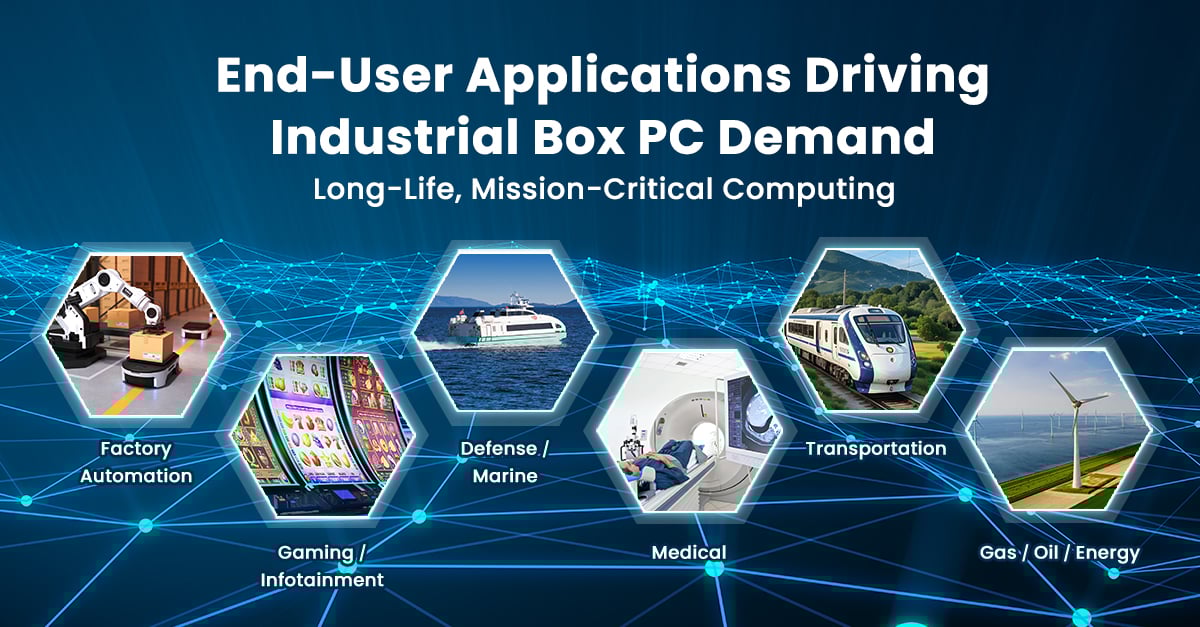
## **Tariff Impacts: A Structural Market Consideration**
Global trade dynamics and tariff developments are increasingly shaping industrial purchasing decisions. Key impacts include:
- Increased supply chain complexity
- Reevaluation of manufacturing and sourcing locations
- Greater emphasis on vendor stability and delivery predictability
As a result, industrial customers are prioritizing partners with global supply chain experience and long-term product commitments.
### How DFI Aligns with Industrial Box PC Market Trends
DFI addresses these market dynamics with an application-focused industrial computing strategy, aligning platform design with real-world deployment requirements.
DFI’s strengths include:
- Application-driven platforms for manufacturing, medical, transportation, energy, and defense
- Up to 10-year lifecycle support for hardware, BIOS, and firmware
- Rugged, fanless system designs for harsh environments
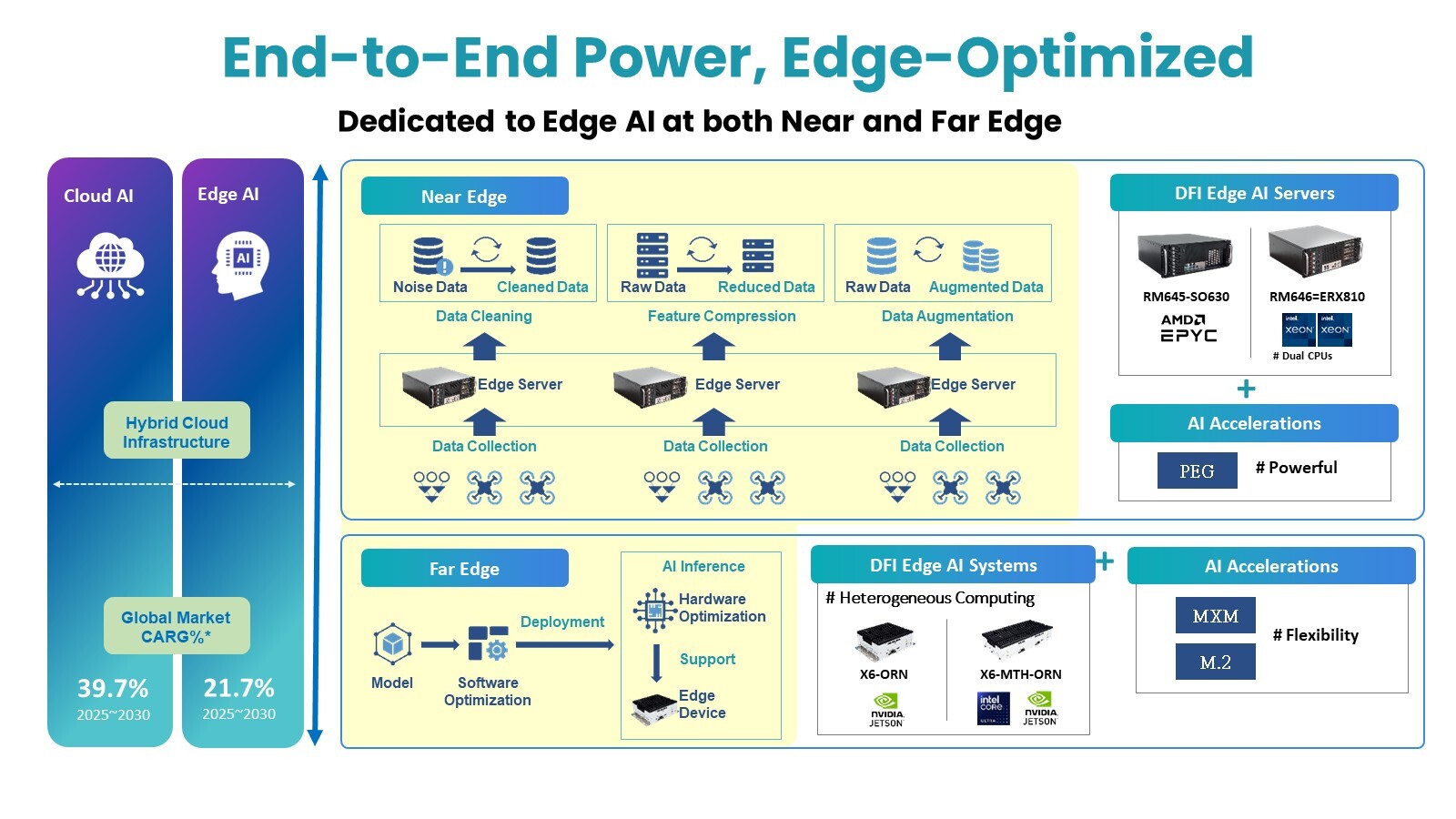
- Edge-ready architectures supporting advanced analytics and AI workloads
- Global manufacturing and supply chain expertise
These capabilities directly support the market’s shift toward reliable, long-life, and application-optimized industrial computing platforms.
### **Key Takeaway: Stability and Application Fit Define Long-Term Value**
The Industrial Box PCs market is defined less by rapid disruption and more by sustained industrial confidence. As industries continue to digitalize operations, long-term value will favor platforms that deliver predictable performance, lifecycle stability, and application readiness.
Looking toward 2030, Industrial Box PCs will remain a foundational layer for industrial automation, edge intelligence, and mission-critical computing—where reliability matters more than headline specifications.
 [DFI Editorial Team](https://blog.dfi.com/en/author/dfi-editorial-team)
The DFI Editorial Team specializes in embedded solutions for industrial automation, energy, transportation, medical, gaming, mission-critical, and intelligent retail sectors, providing expert insights into DFI’s innovations.
##### Share
 [](https://www.linkedin.com/sharing/share-offsite/?url=https://blog.dfi.com/en/industrial-box-pcs-market-outlook-2024-2030) [](http://twitter.com/share?url=https://blog.dfi.com/en/industrial-box-pcs-market-outlook-2024-2030) [](https://www.facebook.com/sharer/sharer.php?u=https://blog.dfi.com/en/industrial-box-pcs-market-outlook-2024-2030)
##### Related Tags
[Trend Watch](https://blog.dfi.com/en/tag/trend-watch) [Automation](https://blog.dfi.com/en/tag/automation) [Industrial Box PC](https://blog.dfi.com/en/tag/industrial-box-pc) [Market Outlook](https://blog.dfi.com/en/tag/market-outlook)
### Get the latest from DFI.
Keep up to date with our latest news and analysis by subscribing to our regular newsletter.

COPYRIGHT © DFI 2026. ALL RIGHTS RESERVED.
[Privacy Policy](https://www.dfi.com/privacypolicy) [Site Map](https://www.dfi.com/sitemap)
Follow us
-
-
-
-
```json
{
"@context" : "https://schema.org",
"@type" : "BlogPosting",
"author" : {
"@type" : "Person",
"name" : "DFI Editorial Team",
"url" : "https://blog.dfi.com/en/author/dfi-editorial-team"
},
"dateModified" : "2026-01-26T07:38:54.465Z",
"datePublished" : "2026-01-19T06:29:27.000Z",
"headline" : "Industrial Box PCs Market Outlook 2024–2030: Steady Growth Driven by Automation, Edge Computing, and Application Demand",
"image" : [ "https://blog.dfi.com/hubfs/20260106_TrendWatch_Industrial%20Box%20PC%20Market%20Report_%E5%AE%98%E7%B6%B2%E7%B8%AE%E5%9C%96_1600x900px.jpg" ],
"mainEntityOfPage" : {
"@id" : "https://blog.dfi.com/en/industrial-box-pcs-market-outlook-2024-2030",
"@type" : "WebPage"
},
"publisher" : {
"@type" : "Organization",
"logo" : {
"@type" : "ImageObject",
"url" : "https://blog.dfi.com/hubfs/DFI-Logo-2.png"
},
"name" : "DFI Inc."
}
}
```